Future Trends
|
Jun 12, 2025
Energy: From Fossil Fuels to Flexible Grids
Natural storage, micro-grids, AI-driven grid software, and repurposed fossil assets are turning energy from a centralized, fossil-based system into a resilient, flexible infrastructure layer built for 24/7 renewables.
Energy is quietly shifting from a centralized, fossil-heavy system to a distributed, intelligent network built on storage, software, and repurposed assets. Evolvia’s Energy thesis is grounded in a clear view: renewable energy only scales when production is decoupled from consumption and distributed through new underlying systems, not just when more solar and wind are added to yesterday’s grid.
Natural forces as giant batteries
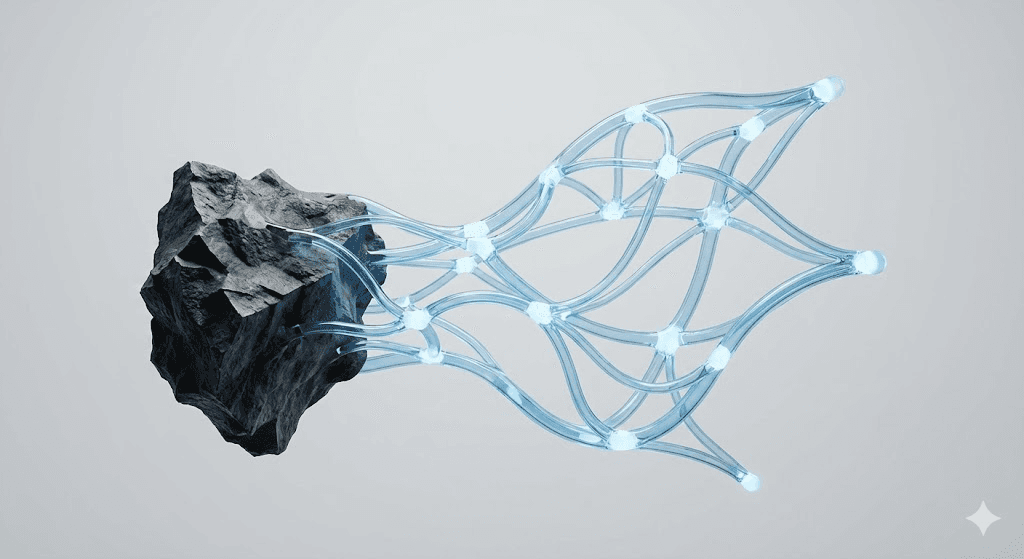
Long-duration storage is the missing piece of a 100% renewable grid, because lithium batteries alone are too short-lived, expensive, and mineral-intensive for multi-day or seasonal balancing. Natural energy storage systems use gravity, compressed air, and heat to store power for far longer lifetimes with abundant materials like rock, water, and salt.
This is where energy storage becomes infrastructure, not just a component. Evolvia invests in storage solutions that can operate for decades, integrate with renewables, and make clean power reliably available when and where it is needed. The focus is on assets that break the tight coupling between momentary production and immediate consumption.
Micro-grids: energy as a local moat
Hospitals, data centers, campuses, and remote communities are still tied to fragile, centralized grids and dirty diesel backup when they fail. Micro-grids turn these sites into self-sufficient energy “islands” that can disconnect from the main grid while running on local solar, storage, and smart controllers.
Evolvia backs micro-grid and local energy solutions that package design, finance, and operations into scalable models that make resilience a feature, not a luxury. By distributing production closer to consumption, these systems embody Evolvia’s thesis: renewable energy needs new, distributed architectures to reach its full potential.
AI becomes the grid’s operating system
As millions of solar panels, batteries, EVs, and flexible loads connect at the edge, the grid is becoming too complex for manual planning and static tools. AI-driven grid modernization turns this complexity into an advantage by forecasting, optimizing, and automating decisions in real time.
Evolvia invests in AI-driven grid modernization that unlocks more capacity from existing infrastructure, coordinates distributed assets, and underpins virtual power plants. These software layers are essential to decoupling production from consumption, making clean energy dispatchable instead of intermittently available.
Making renewables truly 24/7
Wind and solar are now the backbone of new generation, but their intermittency creates time and location mismatches between supply and demand. The emerging resilience stack combines short- and long-duration storage, smarter transmission, and flexible demand to make clean power available around the clock.
Evolvia’s focus on resilience for renewable energy and energy efficiency reflects a systems view: firm, 24/7 renewables will come from orchestration, not a single technology. Efficiency solutions that reduce demand and shift loads are as critical as new generation in creating a flexible grid.
Repurposing fossil assets into clean hubs
Shutting down coal and gas plants without a plan strands valuable infrastructure and harms local economies. Repurposing these sites into clean energy hubs turns a just transition into a practical strategy.
Evolvia backs solutions for repurposing coal and natural gas sites—converting them into storage, renewable interconnection hubs, or hybrid systems that progressively phase out fossil use. This approach leverages existing grid connections and workforce capabilities while aligning with the thesis of building new systems on top of old infrastructure.
Why this is where Evolvia leans in
Evolvia invests in Series A+ startups in grid modernization, renewable energy, and local energy storage that make renewable energy readily available for use. The rationale is explicit: “Renewable Energy needs New Underlying Systems… We need systems that decouple production from consumption and distribute it to unlock the full potential of renewable energy.”
Across storage, micro-grids, AI-driven grid intelligence, resilience, and asset repurposing, Evolvia looks for founders building the connective tissue of the new energy system. These are the teams turning renewables from intermittent inputs into a flexible, reliable backbone for the global economy—and that is where both the impact and the outsized returns will be.